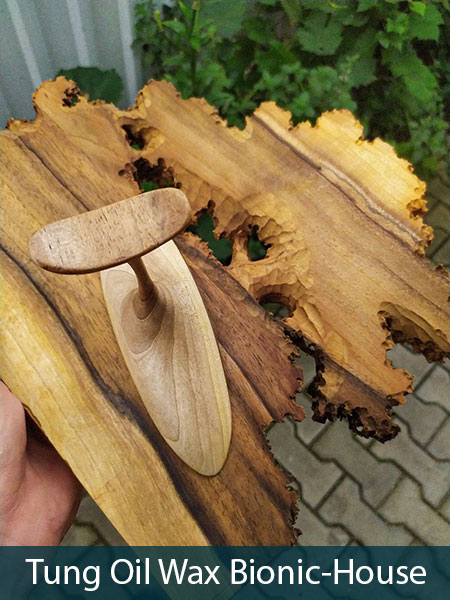
It's no secret that natural wood products need care. But what does this mean, what does it consist of? Those who are accustomed to using products from industrial laminated chipboards believe that it is enough to wipe off the dust in time and glue lagging veneer or plastic laminate in places in time. When this no longer helps, the pattern on the plastic is wiped off, the corners are chipped, the veneer and laminate peel off - it's time to just throw away the sticky product.
Unlike mass-produced products made of laminated chipboard, natural wood furniture can not only be repaired and restored, but also repainted, polished and impregnated, many times. Therefore, despite the high price, wooden furniture has not lost its relevance and it lasts much longer.
Wooden products, furniture, panels, today are most often varnished or painted. Lacquer and paint are hard coatings that prevent surface wear for a long time and protect wood from mechanical damage. But the downside of relative durability is the process of restoration, grinding, removing the old layer of paint or varnish. This process is very time consuming and dirty.
Over time, varnish and paint fade, burn out, peel off, restoration requires removing the old layer mechanically or thermally before applying a new one, often for this you need to dismantle the furniture and take it to the workshop.
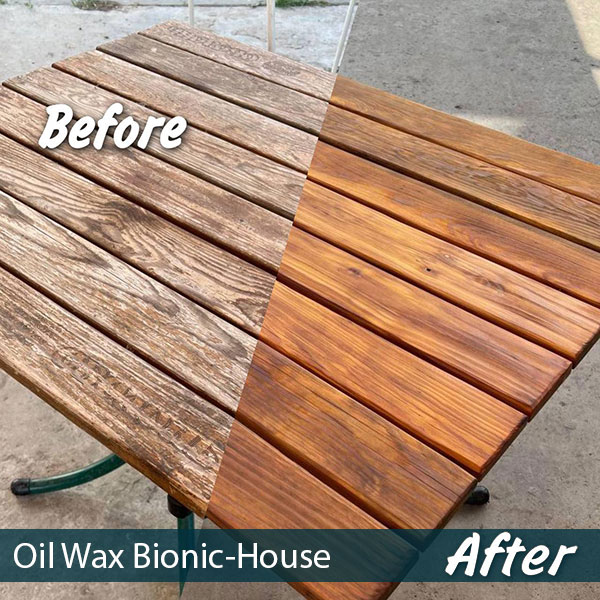
On the contrary, oils and oil waxes do not need to be removed mechanically or thermally…. Instead, surfaces are simply washed, wiped down with mineral spirits, and refurbished. The mechanical cleaning process is only necessary if the renewal process has been carried out many, many times and the wood has burned out and/or darkened. It is worth noting that oil impregnation is many times easier to clean than varnish or paint.
However, modern furniture oil has been modified for several reasons. Like floor oil, it endures mechanical stress, because it impregnates not only wooden panels and facades, but also countertops and work surfaces, on which dishes are moved, put hot, and detergents are used. For this reason, furniture oil has additives that improve its mechanical, chemical and thermal resistance. Penetrating deep into the fibers, it hardens and this gives wear-resistant qualities to the tree itself, and not to the film like varnish or paint.
ALL ADDITIVES USED IN BIONIC-HOUSE OILS COMPLY WITH THE CURRENT EU ENVIRONMENTAL SAFETY REGULATIONS.
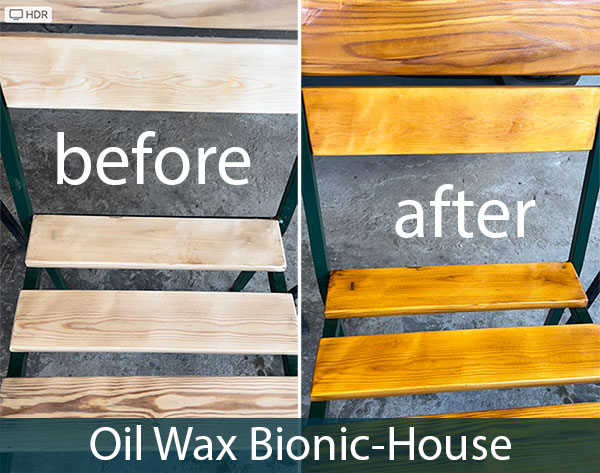
However, if you wish to use the traditional ancient recipe, buy a regular oil wax. He is absolutely natural. The disadvantages of natural oils include a long drying time and the characteristic smell of vegetable oil.