Wood bleaches

«Wood Bleach» Chlorine-free wood bleach
Whitens darkened wood that has burned out, removes pollution, traces of rust, green plaque. Does not contain chlorine, does not have a sharp smell, is ecological, decomposes over time. Code: WB-0001
|

How to simply and easily restore the natural color of wood without the use of caustic toxic components, without grinding and physical effort, and save a lot of time and effort? Try our new Wood Bleach for outdoor Wood Bleach which will return the appearance of a darkened tree without destroying its cellular-fiber structure.
Introducing the new Bionic-House wood bleach
For example, when a wooden terrace is updated with oil for several years, over time, more and more areas of the working surface appear that darken from the water and fade under the sun. There is no point in updating such wood further, since this will no longer improve the appearance. You have a choice: sand or bleach.
Which is better: sanding or bleaching?
Every solution has pros and cons.
Sanding
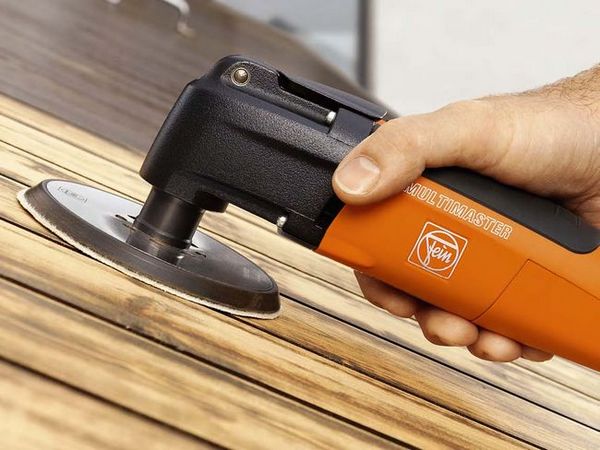 If the wood is severely affected by mold or blue, then sanding will be more useful, since even the most effective antiseptic bleach takes time to work. In addition, different types of wood have different densities (this affects the time and depth of penetration of the product), and blue can spread under the layer to different depths. In this case, grinding is faster and more efficient.
However, sanding the entire surface is a laborious process, and if you do not delay it, treating the wood with antiseptics or bleach in a timely manner, you can avoid it for quite a long time.
If the wood is not decomposed and not damp, but only darkened or burned out, then to restore a fresh appearance, it is not necessary to grind it and remove the layer of wood. Moreover, often the terrace board has a profile with grooves and spikes against slipping, which is difficult to clean mechanically
Whitening
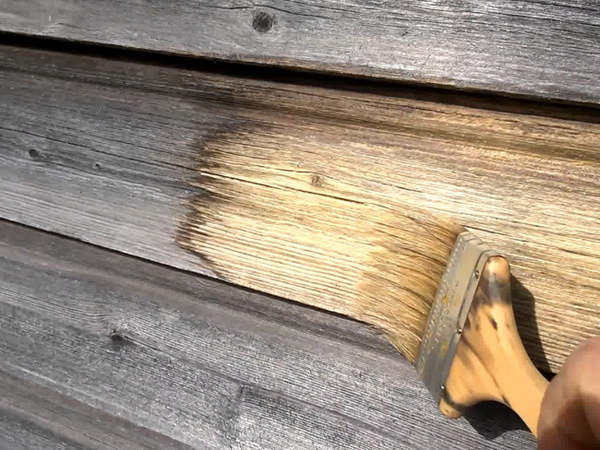 Bleaching allows you to return the wood to a fresh appearance without any tools, with only a paint brush and the product itself at hand. The active components of the bleach react with gray plaque, dissolving and washing away its residue. After the manifestation of the effect, after some time, the surface should be washed off.
The use of chlorine-containing products is unjustified in most cases, because the thickness of the darkened plaque is small even after 2-3 years, but much depends on the operating conditions, the activity of UV radiation of wood and wood species. Therefore, most often we recommend the environmentally friendly biodegradable bleach Wood Bleach (Bionic-House)
If the wooden product or finish has not been processed for a long time, or the operating conditions were extreme, then the layer of affected lignin can reach a thickness of 2-3, and in some cases even 5mm. If mechanical grinding is impractical for any reason, then the use of chlorine bleach is acceptable.
Safety Rules for Working with Wood Bleach
Did you know that: chlorine bleach eats into the woody tissue of the tree's cellular structure, destroying it. If the layer of the wooden surface is already damaged, then the reaction of a strong bleach will simply dissolve it.
The use of a chlorine solution on a "live" tree risks dissolving and loosening the wood tissue and accelerating the loss of appearance several times.
Therefore, use this product with caution, and after obtaining the desired effect, the surface must be rinsed well.
Bionic-House guarantees that its products comply with all European safety and environmental standards. However, when using bleach, do not neglect the safety rules when working with them.