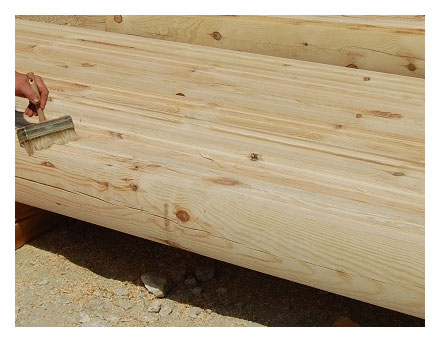
 Form: Ready-to-use, water-based impregnation with strong antiseptic action has several next-generation antifungal and anti-mould components. Does not contain heavy metals.
Purpose: Base impregnation for wood, priming - used in outdoor work to combat and prevent infection with mold fungus and blue stain, wooden structures, finishing materials and facades of wooden buildings.
The composition is designed as a colorless antiseptic impregnation for long-term protection of lumber and other wooden products before and during storage or construction, as well as to create a wood protective layer before painting and varnishing.
At the same time, the antiseptic is used as a deep penetration primer for the treatment of new and previously antiseptic-treated wooden battens and frames, trusses, walls and their cladding, flooring, fences, fences, and other sawn, planed, log structural elements of housing, public, industrial and agricultural purposes. The antiseptic is not used on surfaces previously covered with drying oil, paint, varnish and other film-forming or water-repellent materials.
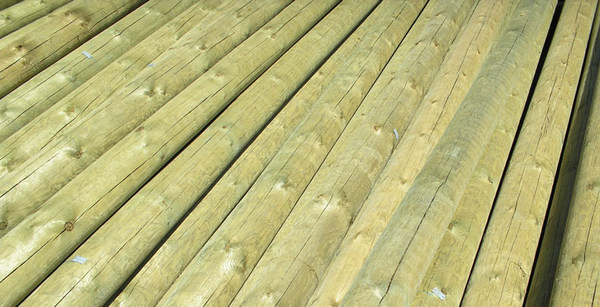 Highly effective agent against wood-destroying fungi and mold
Properties:Protects even damp (20%) wood without filming, staining or interfering with bonding. This antiseptic does not prevent the tree from breathing and does not spoil the appearance of the surface and texture, has no smell. It is absorbed deep enough into dry wood and does not cause corrosion of metal objects. Prevents biodegradation, while not impairing the strength, adhesion and coloring of wood, retains the texture. Fireproof material. No smell.
Contents of active ingredients
Standard composition: Suitable in most cases where a base coat (several coats) is needed before painting or decorating a wooden surface .
Concentrated composition: Used for conservation and transportation of wood.
About Bionic-House transport antiseptic
Antiseptic Impregnat produced by "Bionic-House" is an effective transport antiseptic for protecting freshly cut or freshly sawn wood from mold and blue stain, provides a long lasting effect for wood during transportation, storage and drying.
Blue is a fungal mold that reproduces by spores or mycelium on the surface of logs, but can also penetrate deep into freshly sawn logs through the ends, staining them blue. Infected wood is unsuitable for most finishes and causes a very large loss in value. The loss in the cost of lumber (in cases of infection with fungus and mold) can reach 50% of the basic price.
The transport antiseptic is mainly developed for wood exporters and large logging enterprises. The need to buy a transport antiseptic for such organizations. Due to the fact that they simply need to preserve and transport the tree to the customer and at the same time preserve its natural properties. And we know that the tree is very unstable to various environmental changes and can easily deteriorate on a long journey, become covered with fungus or mold during storage. And the question arises - how to transport a tree by sea or by rail? Antiseptic from "Bionic-House" is a great solution!
If you process a freshly cut tree with it, then it will withstand atmospheric drying well for up to 2-3 years. And if you immediately process the lumber after sawing it, the wood will reach the customer in its original and excellent condition and will not be covered with blue (it will not be affected by mold or fungus), regardless of where in the world this cargo needs to be delivered. Transport antiseptics compare favorably with their low cost, they are very easy to use, and the antiseptic process proceeds quite quickly.
The benefits of Antiseptic Impregnat transport antiseptic
Bionic-House's Antiseptic Impregnat is the ideal solution for treating water-based wood with environmentally friendly ingredients, providing cost-effective and effective protection against mold and blue stain on freshly cut wood.
The characteristics of the treated wood are confirmed by tests in real weather conditions, as well as tests in conditions favorable for the formation and reproduction of mold spores and mycelium, including in environments with different climatic conditions.
We have achieved superior performance through the efficient use of new generation fungicides!
Wood preservative can be supplied in a very simple and easy-to-use form, Bionic-House's Antiseptic Concentrate, which, after normal mixing with water, forms a very good, stable and ready-to-use product.
What do we focus on:
- Easy treatment - rubbing, spraying or dipping.
- Retains natural colors and beautiful wood textures.
- Complies with all requirements of international labor laws and standards.
FAQ:
Why Bionic-House's Antiseptic Impregnat is the best for protecting wood from blue stain and fungus?
Antiseptic Impregnat is an effective, low-cost, high-quality product that provides economical and simple protection of unseasoned wood from blue stains and fungus, leaving it bright and clean even after a long haul.
Why is there such a need to use Antiseptic Impregnat transport antiseptic?
After sawing and felling, the tree is very quickly infected with blue mold and fungi. Therefore, if the tree is not treated with an antiseptic to reliably protect the tree, then it will certainly be infected. After infection, the tree will lose its original natural appearance and value. Therefore, Antiseptic Impregnat must be used as soon as possible after sawing or felling trees.
Will there be any difficulties when using Antiseptic Impregnat wood preservative?
The antiseptic is supplied in concentrated or ready-made form. The tree is treated by conventional immersion in an antiseptic or by spraying. After applying the antiseptic to the tree, it must be completely dried before further use.
How much product should be used to properly protect a tree?
The concentration of the antiseptic provides reliable protection for the tree, but the result depends on many factors. For example, storage conditions, wood species, climate and the duration of wood protection. Bionic-House will make a detailed assessment on a specific environment to fully guarantee the use of the optimal value of the product.

What impregnation is better to use, and what method to apply it to wood?
The deeper the protective agent penetrates into the wood fiber, the longer the life of the product. However, household, construction and industrial impregnation of wood is produced differently. Often, depending on the purpose and operating conditions of wooden buildings, structures, furniture and other factory and hand-made products, different methods and means are used to extend the life of wood. Consider the need and degree of protection desired in this article.
The use of concrete, brick, extruded and composite materials in construction in some industries has replaced wood but has not affected the decline in consumer demand in general. The demand for wooden products continues to grow, production is developing and consumption volumes are increasing, which are measured in tens or even hundreds of thousands of cubic meters.

Expediency of preventive impregnation of wood
Despite the diversity of woody vegetation in our country and the European part of the mainland, only a few species are technically suitable for domestic, construction and industrial use in large volumes. As a result of the widespread use of pine, spruce, smereka, hornbeam, oak, beech, birch and ash, some species, especially oak, pine and spruce, are often in short supply.
Add to the volume consumed also work on the replacement of wooden structures and structures damaged by biodamage in open weather conditions, or as a result of violation of operating conditions at high humidity and temperature. It becomes obvious that it is cheaper to carry out preventive impregnation and renewal regularly than to replace damaged sections of structures or rotten buildings.


According to the data published by "Timber Industry", under conditions of 15% humidity, rotten wood loses its volumetric weight by 2-3 times, and the hardness of rotten wood decreases from 15 to 30 times.

According to a picture of coniferous wood obtained under a microscope, one can visually determine the system of capillary passages of early and late wood of the annual layer, bordered pores, etc. Here you can see in what direction the movement of nutrient juices, and therefore any other liquid.
However, during impregnation, the solution enters transversely through the fringed pores. These micropores can be open or closed, such as tills and microinfiltrates. During infection of a complex vascular system with fungal or mold mycelium, thin fungal filaments are able to fill, clog and destroy the capillary system of vascular tissues and tracheids. Under such conditions, the penetration of antiseptics is very difficult, if not impossible.
Methods of impregnating wood and increasing the depth of absorption

Note: Some methods and protective agents used for industrial purposes and conditions, including impregnating protective compounds, are not suitable for treating residential premises due to severe toxicity, loss of useful properties and / or lack of aesthetic appearance.
The depth of impregnation of a tree usually depends not only on its species, but also on the density and anatomical structure of the fiber structure, even in different layers and different parts of the trunk from the butt to the top - the absorption of bioprotection agents will be different.
For example, the impregnating liquid quite easily penetrates into the pine sapwood, but penetrates into the heartwood by 1-3 mm. Also, depending on the method and type of processing, you will get a different depth of penetration of the substance into the cellular structure of the tree.
B.S.E. (Great Soviet Encyclopedia) reports on three main types of wood impregnation: diffusion, capillary and hydrostatic (under pressure).
- Diffusion (lat. spreading) wood impregnation
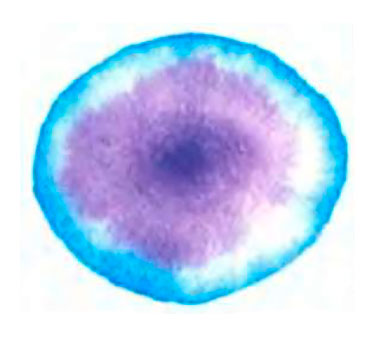
- allows you to create a uniform layer of protection on the surface, through the spread and spread of a liquid fluid. Diffusion is possible only in the case of damp, freshly sawn or raw wood and is therefore only carried out with water-based impregnations. Since there should be a mixing of moisture in the wood and a liquid antiseptic solution, as well as the penetration of the healing substance into the natural moisture of the wood fiber tissues through the capillary effect.
- Wood capillary impregnation
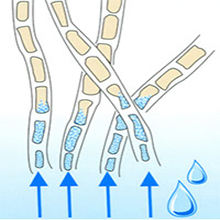
- produced using capillary pressure inside the micropores and vascular system of wood tissue cells. For example, it is the capillary effect that causes moisture to rise along the sapwood from the butt to the crown of the tree, even at a felled trunk. Not the last role is played by the temperature regime, under certain conditions, which enhances the capillary impregnation of wood. Another example of capillary pressure is the impregnation of the ends of a dry beam or wall log during the construction of a wooden house. The goal is to close the cuts of the ends with a protective primer that will stop the wetting of the longitudinal fibers and block the access of atmospheric moisture to the depth of the cellular tissue of the tree.
- Hydrostatic impregnation

This is the main industrial method of wood processing, which allows moving antiseptic substances in liquid, gaseous and molten states through capillaries under artificially created pressure. The processing temperature should not exceed 200–230°C, and the pressure should not exceed 1.4 MN/m2 (14 kgf/cm2). Hydrostatic impregnation is carried out in an autoclave - a special apparatus that allows you to raise the temperature and pressure above atmospheric. This speeds up the reaction and increases the absorbent effect.
Industrial impregnation of wood
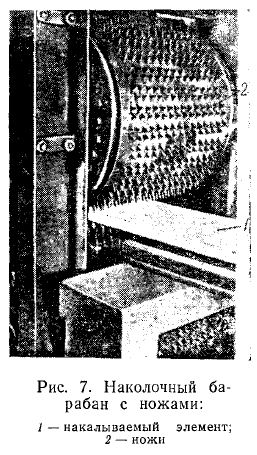 Since we are talking about industrial processing methods, it is worth mentioning another technology that was successfully used back in the 70s of the twentieth century.
This is a "deep impregnation of wood by the use of pins" described in the publication of Baraks A. M., Nikiforov Yu. N., publishing house "Forest Industry".
The essence of the method is to pierce the wood on a drum machine with thin (3 mm) blades to a depth of more than 35-40 mm at certain intervals (mesh with a cell of 15-20 mm) in order to deliver the antiseptic to a depth that is not available to other methods of impregnation .
For example, hydrostatic pressure impregnation penetrates only nA 20 mm transversely in the radial direction and only into porous sapwood. In the tangential direction of the fibers, the depth decreases to a maximum of 10-12 mm, that is, almost two times. If the sapwood layer is completely cut to the heartwood, then the depth of impregnation of the heartwood will not exceed 2-3 mm radially and 1-2 mm tangentially. And only along the fibers under pressure from the end, using the autoclave-capillary method, it was possible to reach 250-300 mm in the depth of the trunk.
Therefore, the impregnation of wood by the method of pricking (up to 30-35 mm depth) made it possible to keep railway sleepers, wooden communication poles and load-bearing wooden structures in a mothballed state for decades. At that time, the use of wood in these industries was massive - this processing method saved hundreds of cubic meters of wood and hectares of precious forest.
Impregnation of wood in domestic conditions and in the construction of residential buildings
However, what is good for industrial needs is not suitable for the construction of residential buildings and for domestic conditions. State construction standards (DBN / SNIP) clearly separate these areas and limit the use of both chemicals and methods for protecting such a valuable biomaterial as wood.
Danger of old technologies
Creosote: the use of creosote oil, the smell of which is often smelled in the subway by residents of big cities and residents of villages near railways, is categorically not recommended for the construction of wooden houses - it is toxic. And although the wood treated with creosote - looks undamaged, and the product is cheap - it is better to overcome the considerable temptation and refuse to use it in housing construction in order to avoid symptoms of respiratory disorders, thyroid gland, and other allergic reactions in people who have long-term exposure to fumes creosote oil.
Old formulas of siccatives in paint and varnish products: in antiseptics and paints produced not so long ago, formulas based on lead compounds were used. Especially often it was used in driers accelerating the drying of paints, varnishes and oils. The harmful vapors of these components occur when inhaled, not only during work with paints or when they dry, but also during the entire service life of the protective coating.
Fire retardants: Phenol-containing compositions are still used in the production of fire and bioprotective impregnation for the fire resistance of wooden materials and structures. For example, earlier these were polychlorophenols and antimony, now these are compositions of phenolic alcohols, urea-furan resins (UFuS), phenol-formaldehyde resins (PFS) and urea-melanino-formaldehyde resins (CMFS) with high toxicity.
For this reason, in the era of the revival of environmentally friendly housing and the increasing volume of construction of houses made of wood, the problem of conservation and protection of wood becomes very tangible, taking into account the economic and environmental side of the issue.
Optimal solution for household impregnation of wooden buildings,
products and structures

Results of the discussion: All of the above is a prerequisite for the emergence of a new product on the market, which, on the one hand, would not require complex industrial processing conditions, and on the other hand, would be both effective and safe for use in everyday life and housing construction. It is this product that impregnations from NPP Bionic House are!

Bionic House successfully develops the latest impregnating compounds, taking into account the latest and most stringent requirements of DIN EN 71-3, Blue Angel DSTU/ISO and E.L.F. Our bioprotective impregnations are designed from scratch and do not include components of outdated technologies and dangerous harmful substances.
Water impregnations of the group impregnate and solvent-solubleorganic protect work perfectly not only during the transportation and storage of lumber, but first of all, their effectiveness has been tested during use in housing construction and at home. Moreover, to create a protective layer, it is not at all necessary to use autoclave soaking under temperature and pressure. It suffices to treat with abundant wetting and rubbing in a diffusion method (in the case of water impregnate) and the natural capillary effect of the spreading of organic substances in dry wood (in the case of treatment by the organic protect group). In both cases, the depth of the protective layer, although it does not exceed 2-2.5 mm, is quite sufficient to create a reliable primer layer before decorative painting, both with a tinted glazing antiseptic and with a finishing paint.
However, the use of impregnations from Bionic House includes but is not limited to use in the domestic sphere. Processing raw sawlogs and soaking sawn timber in impregnating baths before storage, drying and transportation showed excellent results not only in laboratory but also in production conditions.
However, being so effective, our antiseptics and biosecurity are absolutely harmless to humans. Therefore, we are proud to announce the versatility of our impregnating products.
Don't believe me? Try it and see for yourself!


